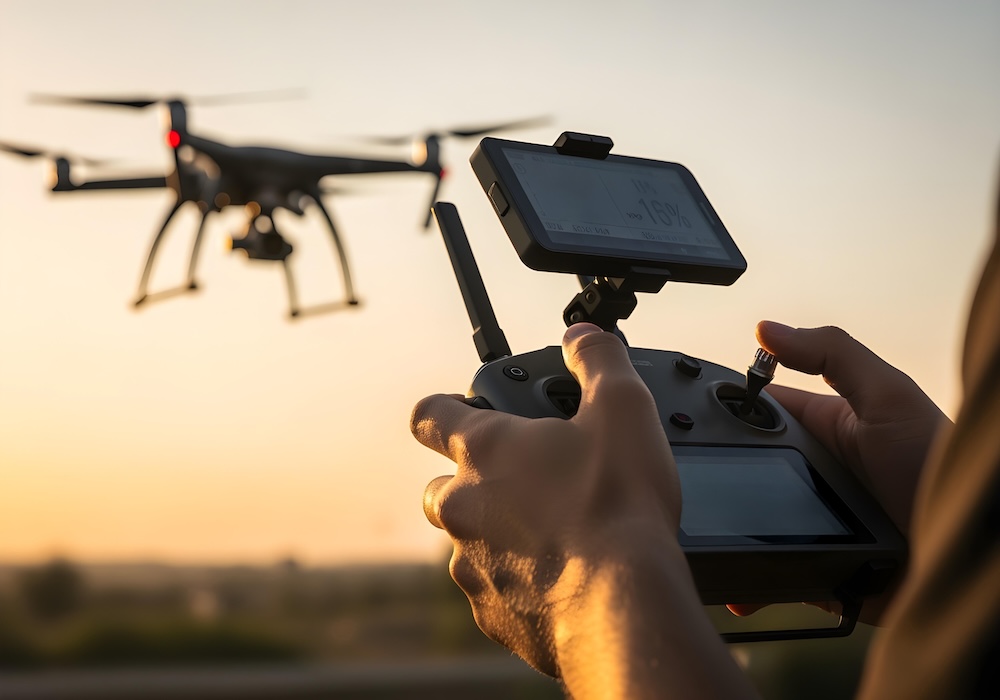

Why More Facilities Are Using Drones for Asset Inspections

What Industrial Assets Can Be Inspected with Drones?

Industrial facilities are under constant pressure to maintain safe, reliable, and efficient operations while minimizing downtime and reducing inspection costs. These days, many organizations are turning to drone technology to enhance how they evaluate critical infrastructure and equipment. Drones are tools that assist in the inspection process – not a replacement for human inspections. Modern drone inspection services provide high-resolution imagery, detailed visual assessments, and access to hard-to-reach areas without requiring extensive scaffolding, rope access, or equipment shutdowns. From routine maintenance programs to large-scale capital projects, industrial drone inspections are becoming an essential tool for asset management.

One of the primary advantages of using drones for industrial inspections is their ability to identify a wide range of asset conditions before they develop into costly failures. Drones can detect corrosion, cracking, spalling, coating deterioration, weather-related damage, fire damage, deformation, and other structural defects. By capturing detailed visual data from multiple angles, drones help engineers and maintenance teams assess asset health more efficiently and make informed decisions about repairs, replacements, and future maintenance strategies.

Drone technology supports a variety of project types across industrial facilities. During construction and capital projects, drones can document progress, verify installation quality, and monitor structural conditions throughout the build process. Reliability teams use drone-collected data to identify developing issues that could affect operational performance, while maintenance departments rely on drone inspections to prioritize repairs and reduce unplanned outages. This versatility makes drones a valuable resource throughout the entire asset lifecycle.

Can Drones Inspect Cooling Towers?

Yes. Drones are highly effective for inspecting cooling towers and can provide detailed information about both structural and surface conditions. Cooling towers are often exposed to moisture, chemicals, temperature fluctuations, and environmental wear, making regular inspections critical for long-term performance. Drones can safely access elevated and confined areas of cooling towers to evaluate structural integrity, identify cracking, locate corrosion, assess coating failures, and document weather-related damage.

Because cooling towers can be difficult and expensive to inspect using traditional methods, drone inspections offer a safer and more efficient alternative. High-resolution imagery allows inspectors to review conditions in detail while reducing the need for personnel to work at height. The resulting data can help facility managers plan maintenance activities, prioritize repairs, and extend the service life of these important assets.

Cooling Towers
Can Drones Inspect It? Common Issues Identified
Yes

Structural Deficiencies

Structural Timber

  • Surface weathering and UV degradation
  • Checking, splitting, and cracking, distortion
  • Biological deterioration (fungal decay/rot)
  • Water tearing
  • Missing members
  • Repair verification

Structural Steel

  • Corrosion/section loss
  • Pack rust at connections
  • Coating deterioration
  • Rust staining
  • Distorted members
  • Connections (bolted/welded)

Concrete Foundations

  • Cracking, spalling, delamination, exposed reinforcing steel
  • Settlement
  • Differential movement
  • Exposed reinforcing steel
  • Efflorescence
  • Chemical attack
  • Scaling
  • Deteriorated grout
  • Erosion

Mechanical Components

Fan Assembly

  • Fan blade
    • Blade cracking
    • Blade deformation
  • Excessive vibration (visible)

Gearbox / Drive

  • Oil leaks
  • Corrosion
  • Misalignment indicators
  • Connections
  • Excessive vibration indicators

Distribution System

Piping & Valves

  • Corrosion, coating failure, distortion
  • Leaks
  • Insulation condition

Access Systems

Ladders, Stairs & Platforms

  • OSHA 1910 Subpart D compliance verifications

3D Laser Scanning – Capture engineering-grade point clouds for as-built documentation, dimensional verification, and structural analysis.

Can Drones Inspect Flare Stacks and Chimneys?

Yes. Flare stacks and industrial chimneys are among the most challenging structures to inspect using conventional methods. Their height and limited accessibility often require specialized climbing crews, scaffolding, or rope access systems, all of which can increase costs and safety risks. Industrial drone inspections provide a safer solution by allowing inspectors to evaluate these structures remotely.

Drones can capture detailed images of flare stacks and chimneys to identify corrosion, cracking, coating degradation, heat-related deterioration, and other visible defects. By reducing climbing requirements and limiting worker exposure to hazardous environments, drone inspection services improve safety while still delivering the information needed to assess structural condition and support maintenance planning.

Flare Stacks
Can Drones Inspect It? Common Issues Identified
Yes
  • Structural Condition Assessments – Inspect the flare stack for corrosion, coating deterioration, distortion, missing or loose components, and other visible structural deficiencies.
  • Flare Tip Inspections – Evaluate the flare tip for erosion, cracking, warping, burn damage, coke buildup, and general condition.
  • Guy Wire & Support Systems – Inspect guy wires, anchor points, clamps, and support hardware for corrosion, damage, and proper tension (where visible).
  • Platforms & Access Systems – Assess platforms, ladders, cages, handrails, and fall protection systems for deterioration and OSHA compliance.
  • Piping & Attachments – Inspect risers, pilots, ignition systems, steam or air assist piping, conduit, and instrumentation for visible defects.
  • Thermal Assessments – Utilize infrared imaging to identify abnormal heat patterns, insulation deficiencies, refractory issues, and active leaks where applicable.
  • 3D Laser Scanning – Capture engineering-grade point clouds for as-built documentation, dimensional verification, and structural analysis.

Can Drones Inspect Concrete Structures?

Yes. Concrete structures are commonly found throughout industrial facilities and can experience deterioration over time due to environmental exposure, operational loads, and aging. Drones are well suited for inspecting a wide range of concrete assets, including elevated slabs, foundations, silos, concrete towers, retaining walls, and other structural components.

Using high-resolution cameras, drones can identify surface cracking, spalling, delamination indicators, weather damage, staining, and other signs of deterioration. They can also access elevated or difficult-to-reach areas without disrupting facility operations. Regular drone-based inspections help owners monitor asset condition, document changes over time, and develop proactive maintenance strategies that reduce long-term repair costs.

Concrete Structures
Can Drones Inspect It? Common Issues Identified
Yes
  • Structural Condition Assessments – Inspect structural steel framing, supports, and exterior components for corrosion, coating deterioration, distortion, and connection deficiencies.
  • Casing & Insulation – Evaluate heater casing, insulation, lagging, and cladding for damage, missing sections, corrosion, and weather intrusion.
  • Stack Inspections – Inspect heater stacks for coating deterioration, corrosion, distortion, loose components, and structural defects.
  • Burner & Process Attachments – Assess burner fronts, access doors, observation ports, piping, platforms, and external instrumentation for visible deterioration.
  • Platforms & Access Systems – Inspect ladders, stairways, platforms, handrails, and fall protection systems for damage and OSHA compliance.
  • Thermal Assessments – Utilize infrared imaging to identify hot spots, insulation failures, refractory degradation, and abnormal operating conditions.
  • 3D Laser Scanning – Produce accurate point clouds and 3D models for dimensional verification, retrofit planning, clash detection, and engineering documentation.
Tanks
Can Drones Inspect It? Common Issues Identified
Yes
  • Settlement Surveys – RTK drone surveying and LiDAR to identify differential settlement, tilt, and elevation changes of tanks and foundations.
  • Tank Distortion – Assess shell deformation, bulging, out-of-roundness, denting, and roof deflection using high-resolution imagery and 3D modeling.
  • Foundation Inspections – Evaluate ringwalls, concrete foundations, and secondary supports for cracking, spalling, settlement, erosion, and drainage concerns.
  • Coating Assessments – Document coating deterioration including peeling, blistering, flaking, chalking, and areas of coating breakdown.
  • Corrosion Assessments – Identify visible corrosion, section loss, rust staining, pitting, and corrosion at shell, roof, nozzles, and structural attachments.
  • Floating Roof Inspections – Inspect roof drains, seals, pontoons, roof appurtenances, standing water, and visible roof condition without requiring personnel access.
  • Volumetric Calculations – Perform volumetric analysis of storage tanks and secondary containment areas for inventory estimation, containment capacity verification, and earthwork calculations.
  • Tank Attachments – Inspect stairways, platforms, ladders, handrails, nozzles, piping, vents, gauges, and other external attachments for deterioration, damage, and OSHA compliance.
  • 3D Laser Scanning – Capture engineering-grade point clouds for as-built documentation, dimensional verification, and structural analysis.

Can Drones Inspect Structural Steel?

Yes. Structural steel plays a critical role in supporting industrial operations, and regular inspections are necessary to ensure safety and reliability. Drones can effectively inspect pipe racks, support frames, processing structures, platforms, catwalks, and other steel infrastructure throughout industrial sites.

During inspections, drones can identify corrosion, coating failures, loose connections, deformation, and other visible signs of deterioration. The ability to inspect large steel structures quickly and safely makes drones especially valuable for facilities with extensive infrastructure spread across large areas. By collecting detailed visual data without requiring personnel to work at significant heights, industrial drone inspections help improve safety while providing actionable information for maintenance and reliability teams.

As facilities continue to prioritize safety, efficiency, and asset reliability, drones are becoming a preferred solution for inspecting critical infrastructure. Whether evaluating cooling towers, flare stacks, chimneys, concrete structures, or structural steel, drone inspection services provide a faster, safer, and more cost-effective approach to industrial inspections. By delivering detailed condition data and improving access to difficult locations, industrial drone inspections help organizations make smarter maintenance decisions, reduce risk, and protect valuable assets.

Manufacturing Facilities and Warehouses
Can Drones Inspect It? Common Issues Identified
Yes
  • Structural Condition Assessments – Inspect structural steel, reinforced concrete, masonry, and timber components for corrosion, cracking, distortion, section loss, connection deficiencies, and other visible deterioration.
  • Roof & Building Envelope Inspections – Evaluate roofing systems, wall panels, joints, flashing, skylights, gutters, and downspouts for damage, deterioration, water intrusion, and maintenance needs.
  • Foundation Assessments – Inspect foundations, slabs, loading docks, and retaining walls for cracking, settlement, spalling, joint deterioration, and differential movement.
  • Coating & Corrosion Assessments – Document coating degradation, corrosion, exposed steel, and areas requiring maintenance or repair.
  • Equipment Support Structures – Inspect mezzanines, pipe racks, equipment platforms, overhead crane runway structures, conveyors, and support framing for visible structural deficiencies.
  • Access Systems & OSHA Compliance – Evaluate ladders, stairs, platforms, guardrails, handrails, walking-working surfaces, and fall protection systems for damage and OSHA compliance.
  • Thermal Assessments – Utilize infrared imaging to identify roof moisture intrusion, insulation deficiencies, electrical hot spots, process equipment anomalies, and building envelope issues.
  • 3D Laser Scanning & Digital Twins – Capture engineering-grade point clouds and 3D models for as-built documentation, dimensional verification, retrofit planning, BIM integration, and facility asset management.
Piping and Pipelines
Can Drones Inspect It? Common Issues Identified
Yes
  • External Condition Assessments – Inspect piping systems for corrosion, coating deterioration, leaks, mechanical damage, distortion, unsupported spans, and other visible defects.
  • Pipe Rack & Structural Support Inspections – Assess pipe racks, structural steel, supports, guides, shoes, hangers, spring cans, and anchors for corrosion, distortion, loose components, and connection deficiencies.
  • Coating & Corrosion Assessments – Document coating failures, rust staining, pitting, section loss, insulation damage, and visible corrosion under insulation (CUI) indicators.
  • Leak Detection – Identify visible product leaks, staining, insulation saturation, and thermal anomalies indicative of process leaks or insulation deficiencies.
  • Valves & Appurtenances – Inspect valves, flanges, expansion joints, vents, drains, instrumentation, and supports for visible deterioration, leakage, and damage.
  • Crossings & Right-of-Way Surveys – Evaluate pipeline corridors, river crossings, road crossings, encroachments, vegetation, erosion, and slope stability.
  • Topographic & Corridor Mapping – Generate orthomosaics, digital terrain models, and topographic surveys for route planning, drainage evaluation, and construction support.
  • 3D Laser Scanning – Capture engineering-grade point clouds and 3D models for as-built documentation, dimensional verification, retrofit planning, and clash detection.

Brindley Engineering

See profile

SIGN UP FOR OUR NEWSLETTER

Join our email list!

By clicking Sign Up you’re confirming that you agree with our Terms and Conditions.