

Brindley Engineering’s Gourav Patodi, PE, Staff Structural Engineer, Team Lead and Matthew Wooden, Staff Engineer, Civil/Structural Lead, to present at ICRI 2026 Fall Convention in Phoenix.



The International Concrete Repair Institute (ICRI) fall convention in Phoenix, Arizona will explore the powerful theme of Rising from the Rubble: Studies in Resilience. The convention will offer a platform for both seasoned professionals and industry newcomers to master the science of concrete restoration and the methodologies that ensure high-performance, sustainable results.
Patodi and Wooden will be presenting:Rising from the Rubble: Rehabilitating a Severely Deteriorated Industrial Concrete Tabletop on Monday October 19, 2026, at 9:15am Palo Verde C: 1st floor. We sat down with Gourav and Matthew for a preview of their presentation.
About Gourav Patodi, PE:
Gourav Patodi, PE, is a Staff Structural Engineer and Team Lead specializing in the structural assessment, and rehabilitation of aging industrial concrete and steel structures. He has more than seven years of experience in the oil and gas industry with expertise in structural evaluations, durability-focused repair design, and construction support for complex refinery and petrochemical facilities.
He leads the structural team for multiple Gulf Coast sites, overseeing maintenance programs, repair packages, and turnaround execution strategies. His background includes structural analysis, engineering, lifting and rigging, structural and fireproofing assessments, and retrofit design for critical equipment support structures, cooling towers, and pipe racks. Gourav is an active mentor, strong client communicator, and a voting member of ACI Committee 117. He is certified as an ICRI Concrete Surface Repair Technician and holds multiple ACI certifications.
About Matthew Wooden:
Matthew Wooden is a Lead Civil/Structural Engineer with over 7 years of maintenance and reliability experience in various oil & gas and chemical facilities across North America. He is a practicing ICRI Concrete Surface Repair Technician (CSRT), ACI Concrete Field-Testing Technician – Grade 1, and ACI Post-Installed Concrete Anchor Installation Inspector. He has performed inspections and developed repair plans and designs on a multitude of reinforced concrete structures, steel structures, and cooling towers.
Over the past 3+ years, he has managed an annual multi-million dollar fireproofing and structural reliability program at a major Midwest refinery with the goal of optimizing facility risk reduction.
Q: What is your role at the ICRI fall convention in Phoenix? What is your larger role with ICRI?
A: We will be presenting a real-world case study on the rehabilitation of a severely deteriorated reinforced concrete tabletop supporting critical process equipment. We’ll share the assessment and repair process, along with the unexpected field conditions and engineering decisions that shaped the final rehabilitation.
We are both ICRI Concrete Surface Repair Technicians (CSRT) and active members of the concrete repair community. Brindley Engineering is also a Supporting Member of ICRI, which gives our team opportunities to stay engaged in industry advancements, technical education, and continued learning involving concrete assessment and repair. Presenting at the Fall Convention gives us a great opportunity to share what we’ve learned through our field experience and contribute that knowledge back to the ICRI community.
Q: What is your role at Brindley Engineering?
A: We serve as Structural Engineer and Team Leads at Brindley Engineering, supporting structural reliability, maintenance, and rehabilitation programs for industrial facilities across the US. Our work includes condition assessments, repair and retrofit design, structural analysis, turnaround support, and construction-phase engineering for aging concrete and steel structures. As Team Leads, we also help coordinate multidisciplinary project teams, mentor younger engineers, and work closely with clients to turn field observations into practical and constructible engineering solutions.
Q: What do you hope people will take away from the presentation?
A: We hope attendees walk away understanding that successful concrete rehabilitation is rarely just about selecting the right repair material. It starts with understanding why deterioration occurred, recognizing that conditions can change once demolition begins, and developing a repair strategy that can adapt to what is found in the field. The constructability of the repair is just as important as the technical design for on schedule and under budget repairs.
We want to share practical lessons that attendees can apply to their own projects, particularly around condition assessment, repair sequencing, constructability, anchor rehabilitation, and making timely engineering decisions when unexpected conditions are uncovered.
Q: Why is this topic important?
A: Many industrial concrete structures have been in service for decades while supporting heavy equipment and being exposed to moisture, chemicals, vibration, thermal cycles, and demanding operating conditions. Replacing these structures is often impractical, so owners need reliable ways to assess, repair, and extend their service life. This case study demonstrates why understanding the existing structure and deterioration mechanisms is so important. What appears to be a concrete surface repair can reveal much more significant issues once deterioration is removed. Being prepared to recognize and respond to those conditions is critical to achieving a safe, durable, and constructible repair.
Q: What other presentations are you looking forward to seeing at the convention?
A: One of the greatest benefits of an ICRI convention is having all sides of the concrete repair industry in the same place and being able to learn from those different perspectives. I also look forward to hearing how other engineers, contractors, manufacturers, and owners have approached difficult field conditions and what they learned during execution. Having the opportunity to talk to the professionals behind the multitude of products that we use and specifically in our designs is extremely valuable.
Q: Is there anything else you want attendees to know about the convention or your presentation?
A: Our presentation is intentionally centered on a real project and the decisions that had to be made as the work progressed. We’ll discuss what was initially observed, what was discovered during demolition, how those discoveries affected the repair strategy, and the lessons we carried forward. It’s a good showcase on how detailed inspections paired with hands-on field evaluations assist in the overall repair design and construction.
We hope attendees will come ready to participate in the discussion and share their own experiences. Some of the most valuable lessons in concrete repair come from comparing how different teams have solved similar problems in the field.
Q: Is there a summary of the presentation?
A: Yes! Here it is:
Rising from the Rubble: Rehabilitating a Severely Deteriorated Industrial Concrete Tabletop
Monday October 19, 2026, 9:15 AM– 10:00 AM MST
Palo Verde C: 1st Floor
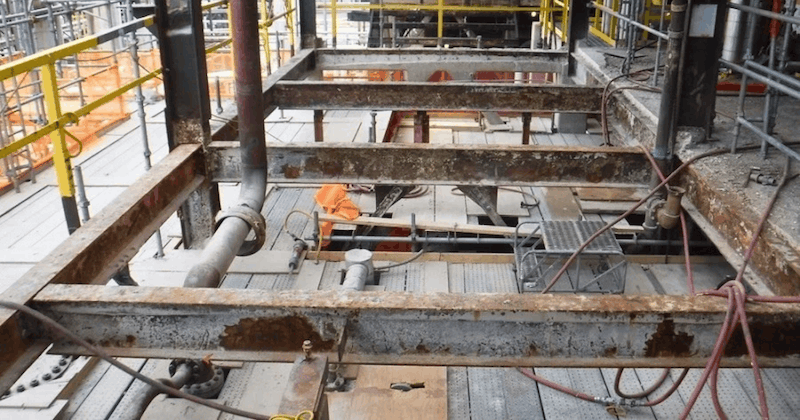
Concrete repairs in heavy industrial facilities require more than restoring deteriorated concrete, they demand engineering solutions that balance structural reliability, constructability, operational constraints, and long-term durability. This presentation examines the rehabilitation of a reinforced concrete tabletop supporting two one-million-pound process vessels during a refinery turnaround after severe deterioration was identified.
Field investigations revealed extensive concrete spalling, reinforcement corrosion, and evidence of previous repairs that had failed prematurely. During demolition, additional hidden deficiencies, including severely corroded and sheared anchor rods supporting critical equipment, required real-time engineering modifications to the repair approach. The final rehabilitation incorporated non-destructive evaluation, targeted material testing, fiber-reinforced dry-mix shotcrete, anchor rehabilitation, enhanced reinforcement detailing, and carefully sequenced construction activities to safely complete repairs within the outage schedule.
Using this project as a case study, the presentation highlights how investigation findings, constructability considerations, and field-driven engineering decisions influenced the final repair strategy. Attendees will gain practical lessons on addressing unforeseen conditions, improving repair durability, and extending the service life of heavily loaded reinforced concrete structures operating in aggressive industrial environments.
Learning Objectives:
- Identify common deterioration mechanisms and hidden deficiencies in heavily loaded industrial reinforced concrete structures.
- Explain how field investigations and demolition findings can influence repair strategies and engineering decisions.
- Discuss constructability, repair sequencing, and anchor rehabilitation techniques used during industrial turnaround projects.
- Apply lessons learned from this case study to improve the durability, resilience, and service life of reinforced concrete structures.
For more about the ICRI conference:
- To register for the ICRI Conference visit the ICRI registration page.
- For more information on the presentation check out the ICRI website.
For more about Brindley Engineering:
Share this post